
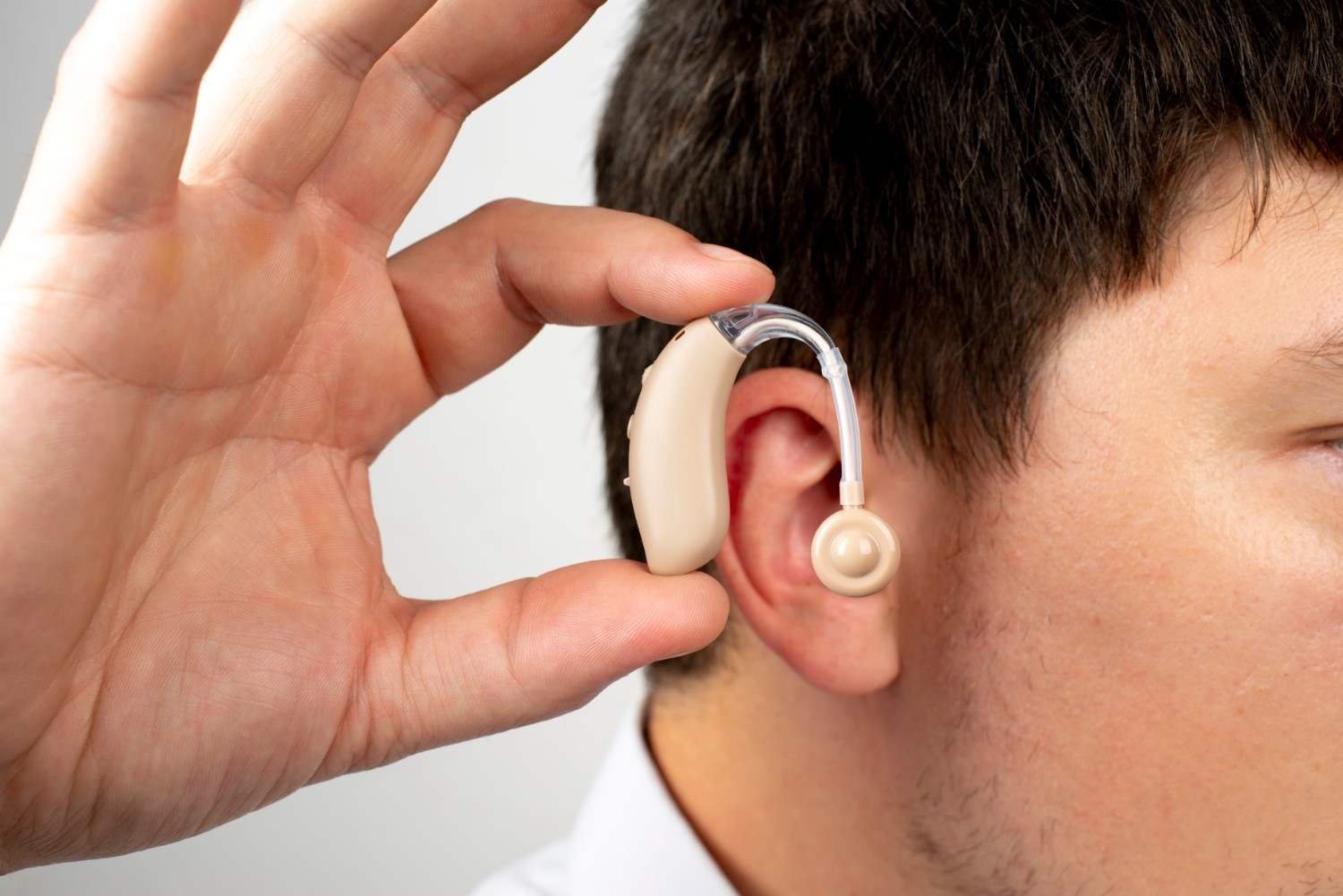
Hearing plays an important role in a child's communication, learning, and social development. When a child has significant hearing loss and conventional hearing aids do not provide enough benefit, a cochlear implant may be considered. A Cochlear Implant Specialist in Sector 10 Gurgaon can assess the child's hearing condition and help parents understand whether cochlear implantation may be appropriate.
A cochlear implant is different from a traditional hearing aid. Instead of simply making sounds louder, it uses an electronic system to stimulate the hearing nerve and provide access to sound. The suitability of an implant depends on several factors, including the child's hearing level, hearing-aid benefit, age, overall health, and hearing development.
Want a direct connection with us on WhatsApp? Click now.
What Is a Cochlear Implant?
A cochlear implant is an electronic hearing device designed for people with certain types of significant or severe hearing loss. It has external and internal components that work together.
The external part captures sounds and processes them. The internal component receives the signals and delivers electrical stimulation to the hearing nerve. The brain then interprets these signals as sound.
Unlike a hearing aid, which primarily amplifies sound, a cochlear implant provides an alternative way to send sound information to the auditory system.
How Can a Cochlear Implant Help a Child?
For an appropriately selected child, a cochlear implant can provide greater access to sounds that may be difficult to hear with hearing aids alone.
1. Better Access to Speech Sounds
Children need consistent access to speech sounds to develop listening and communication skills. A cochlear implant may help a child detect and understand speech more effectively when conventional amplification has not provided sufficient benefit.
A Cochlear Implant Specialist in Sector 10 Gurgaon can evaluate hearing responses and other clinical factors before discussing this option with parents.
2. Supports Listening and Spoken Communication
After implantation, children generally need structured auditory rehabilitation and regular follow-up. Listening practice helps the child learn to recognize and understand the sounds received through the device.
The goal is not simply to provide the implant but to help the child make meaningful use of the sound information.
3. May Support Language Development
Access to sound is an important part of developing spoken language for children who are following an auditory-verbal or listening-and-spoken-language approach. Earlier identification of hearing loss and appropriate intervention can be important considerations when planning care.
Dr. Harsh Vardhan can help parents understand the hearing assessment process and the factors considered when discussing cochlear implantation.
4. Can Improve Awareness of Everyday Sounds
Hearing is useful beyond conversations. Children interact with many sounds throughout the day, such as voices, classroom activities, alarms, household sounds, and environmental noises.
A cochlear implant may help provide access to these sounds, although the experience differs from child to child.
Who May Be Considered for a Cochlear Implant?
Not every child with hearing loss needs a cochlear implant. Specialists generally consider whether the child receives adequate benefit from appropriately fitted hearing aids and assess the type and degree of hearing loss.
A cochlear implant evaluation may involve:
- Detailed hearing tests
- Hearing-aid assessment
- Speech and language evaluation
- Medical examination
- Imaging when clinically required
- Assessment of developmental and communication needs
- Discussion with parents about expectations and rehabilitation
A Cochlear Implant Specialist in Sector 10 Gurgaon can coordinate or guide families through these evaluations and explain what the results mean.
What Happens After Cochlear Implant Surgery?
Surgery is only one part of the cochlear implant journey. Once the implant has healed sufficiently, the external equipment is fitted and activated according to the treatment plan.
The child then needs regular follow-up and auditory rehabilitation. During this period, parents and caregivers play an important role by creating opportunities for listening and communication in everyday situations.
Progress varies between children. Factors such as the duration of hearing loss, age when hearing loss was identified, previous hearing-aid use, communication environment, and rehabilitation can influence the child's experience.
Why Follow-Up and Rehabilitation Matter
A cochlear implant does not automatically make hearing normal. The child has to learn to interpret the new auditory information provided by the device.
Regular follow-up allows the clinical team to monitor hearing responses, device function, and the child's communication progress. Rehabilitation can help children gradually build listening skills and understand speech.
Dr. Harsh Vardhan can guide parents on the importance of ongoing assessment and appropriate follow-up after treatment.
Frequently Asked Questions
1. Can every child with hearing loss receive a cochlear implant?
No. Cochlear implantation is considered on an individual basis. The type and severity of hearing loss, hearing-aid benefit, medical findings, developmental factors, and other considerations are assessed before recommending treatment.
2. Is a cochlear implant the same as a hearing aid?
No. A hearing aid mainly amplifies sound, while a cochlear implant uses electrical stimulation to provide sound information through the auditory nerve.
3. Will a child hear normally immediately after implantation?
No. Children generally need activation, programming, regular follow-up, and auditory rehabilitation to learn to interpret the sounds provided by the implant.
4. Is cochlear implant surgery the only part of the treatment?
No. Evaluation, surgery when appropriate, device activation, programming, rehabilitation, and long-term follow-up are all important parts of the cochlear implant process.
5. When should parents discuss cochlear implantation with a specialist?
Parents should discuss the option when their child's hearing loss is significant and appropriately fitted hearing aids are not providing the expected benefit. A specialist can determine whether a detailed cochlear implant evaluation is appropriate.
Conclusion
Significant hearing loss can affect how a child experiences speech, communication, education, and everyday sounds. For children who meet the appropriate criteria, a cochlear implant can provide access to sound when hearing aids alone are not sufficient.
The decision requires a thorough assessment rather than relying on hearing loss alone. Working with a Cochlear Implant Specialist in Sector 10 Gurgaon can help parents understand the available options, evaluation process, expected rehabilitation, and long-term follow-up.
Dr. Harsh Vardhan emphasizes the importance of individualized assessment because every child's hearing and communication needs are different. Parents who are considering cochlear implantation should discuss their child's hearing history and treatment options with a qualified ENT and cochlear implant team.