
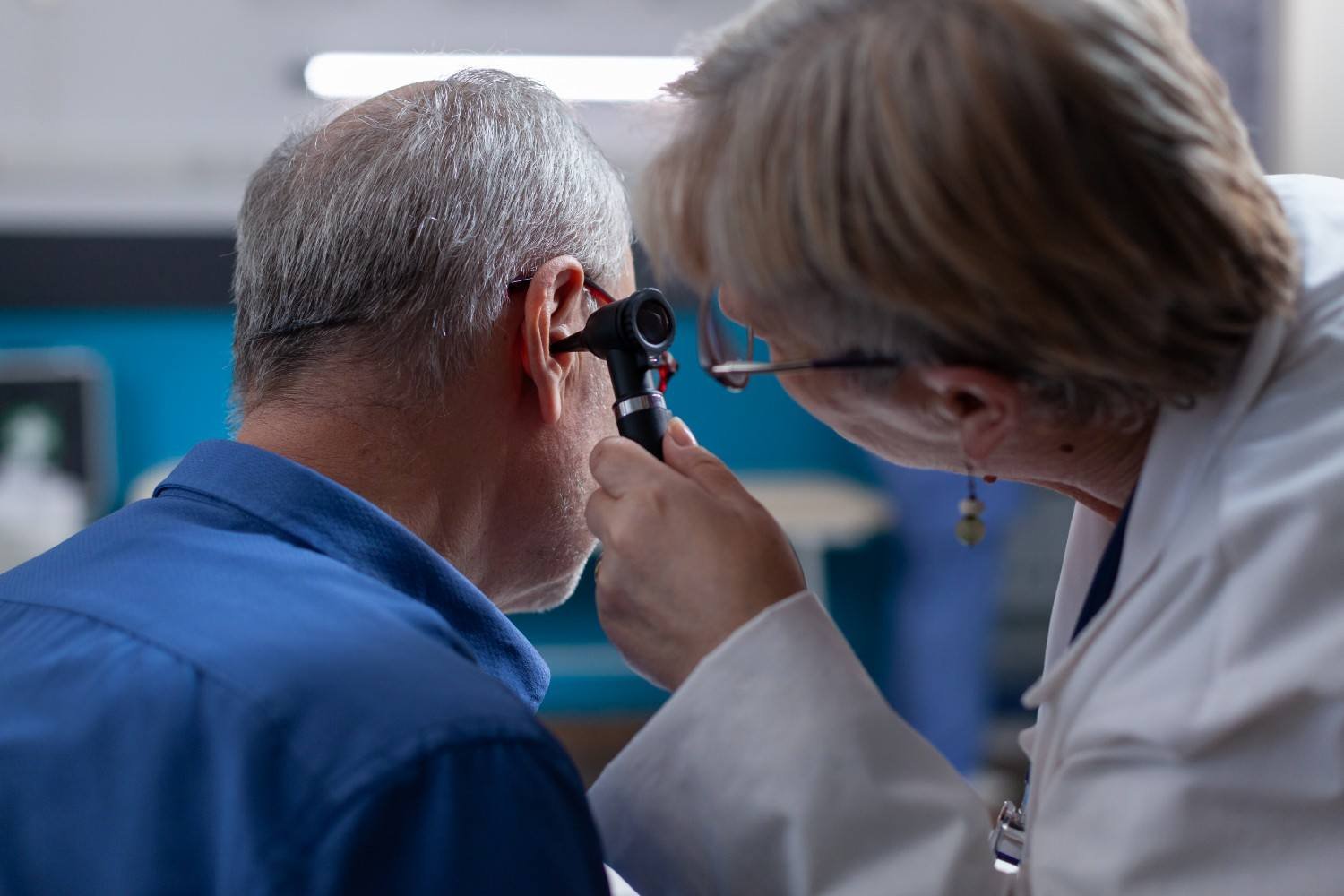
Ear problems can affect hearing, balance, comfort, and everyday communication. While some conditions improve with medicines or routine procedures, others may require surgery. Endoscopic Ear Surgery in Gurugram is a minimally invasive approach that allows an ENT specialist to examine and treat certain ear conditions using a small endoscope.
Unlike traditional ear surgery, an endoscopic approach can provide a close view of areas that may be difficult to see through a conventional operating microscope. However, it is not suitable for every ear problem. The recommended technique depends on the condition, its location, and the patient's individual needs.
Want a direct connection with us on WhatsApp? Click now.
What Is Endoscopic Ear Surgery?
Endoscopic ear surgery uses a thin instrument called an endoscope. It has a small camera and light at its tip, allowing the surgeon to view structures inside the ear on a monitor.
The technique can be used for selected middle-ear and ear canal conditions. It may help the surgeon work through the ear canal in appropriate cases, potentially reducing the need for larger incisions.
Dr. Harsh Vardhan explains that choosing an endoscopic technique requires a proper examination of the ear and an understanding of the underlying problem. The goal is not simply to use a newer technique, but to select the safest and most appropriate surgical approach.
Which Ear Problems Can Be Treated?
1. Chronic Middle Ear Infections
Repeated or long-lasting middle ear infections can sometimes cause persistent discharge, hearing difficulties, or changes to the eardrum and middle-ear structures.
When surgery is required, an endoscopic approach may be considered in selected cases. It can provide a detailed view of the middle ear and help the surgeon assess areas that are difficult to visualize directly.
2. Cholesteatoma
A cholesteatoma is an abnormal collection of skin cells that can develop in the middle ear. It may gradually damage nearby structures if left untreated.
Surgery is often needed to remove the disease. In carefully selected cases, Endoscopic Ear Surgery in Gurugram may be used to examine and treat areas of the middle ear and help identify disease hidden from a straight-line view.
The exact surgical method depends on the size and extent of the cholesteatoma.
3. Eardrum Problems
A perforated eardrum can occur because of infection, injury, or other causes. Some perforations heal without surgery, while persistent perforations may require repair.
Endoscopic techniques can be used in selected ear surgeries involving the eardrum. The endoscope may provide a wider-angle view of the surgical area, helping the surgeon assess the eardrum and surrounding structures.
4. Middle Ear Disease
Certain conditions affecting the middle ear may require surgery when they do not respond adequately to conservative treatment.
An endoscopic approach can provide improved visualization of the middle-ear spaces in appropriate patients. This can be particularly useful when disease extends into areas that are not easy to inspect using a conventional view.
According to Dr. Harsh Vardhan, the decision to use an endoscope depends on the specific anatomy and disease pattern rather than on the patient's symptoms alone.
5. Selected Ear Canal and Hidden Ear Lesions
Some abnormalities may be located in areas of the ear that are difficult to examine fully with a straight view.
An endoscope can offer angled and close-up views of the ear canal and middle ear. This may assist with diagnosis and treatment in selected cases.
However, not every hidden lesion is suitable for an endoscopic procedure. A detailed ENT assessment is essential before deciding on surgery.
Why Is Endoscopic Ear Surgery Considered?
One of the main advantages of endoscopic ear surgery is visualization. The camera can provide a magnified view of the surgical field and allow the surgeon to look around corners and into spaces that may otherwise be difficult to inspect.
Depending on the procedure, potential advantages may include:
- Detailed visualization of ear structures
- Access to selected areas through the ear canal
- Less extensive surgical access in suitable cases
- Precise assessment of disease
- A minimally invasive approach for selected conditions
These benefits do not mean endoscopic surgery is automatically better for every patient. Traditional microscopic ear surgery remains important and may be more appropriate for certain conditions.
How Is the Right Surgical Approach Decided?
Before recommending surgery, an ENT specialist usually considers the patient's symptoms, medical history, ear examination, hearing assessment, and other relevant investigations.
The location and extent of the disease are especially important. The surgeon may recommend an endoscopic, microscopic, or combined approach depending on what will provide the best access and disease control.
If you are considering Endoscopic Ear Surgery in Gurugram, discuss your symptoms and treatment options with an experienced ENT specialist rather than choosing a surgical technique based only on the procedure's name.
Dr. Harsh Vardhan focuses on evaluating the underlying ear condition before determining whether surgery is appropriate.
What Should Patients Expect After Surgery?
Recovery depends on the type and extent of ear surgery performed. Patients may need to follow specific instructions regarding ear care, medications, activity, and follow-up visits.
Hearing may not improve immediately because the ear needs time to heal. Follow-up appointments allow the ENT specialist to monitor healing and assess the treatment outcome.
Patients should also report unusual symptoms such as increasing pain, significant discharge, fever, or other unexpected changes after surgery.
Frequently Asked Questions
1. Is endoscopic ear surgery suitable for everyone?
No. Endoscopic surgery is appropriate for selected ear conditions. The decision depends on the location and extent of disease, ear anatomy, and the type of treatment required.
2. Can cholesteatoma be treated with endoscopic ear surgery?
In selected cases, yes. An endoscope can help the surgeon visualize and remove cholesteatoma from certain areas of the middle ear. More extensive disease may require another or combined surgical approach.
3. Can endoscopic surgery treat a perforated eardrum?
Endoscopic techniques may be used for selected eardrum repair procedures. The suitability depends on factors such as the size and location of the perforation and the condition of the middle ear.
4. Does endoscopic ear surgery improve hearing?
The primary goal of surgery depends on the underlying condition. In some cases, treating the disease may help hearing, but hearing improvement cannot be guaranteed for every patient.
5. How do I know whether I need Endoscopic Ear Surgery in Gurugram?
A proper ENT examination is necessary. Your doctor may assess the ear, hearing, symptoms, and relevant test results before recommending surgery or another treatment.
Conclusion
Endoscopic ear surgery can be a useful minimally invasive option for selected ear conditions, including certain middle-ear diseases, cholesteatoma, eardrum problems, and other conditions that require detailed visualization. Its suitability depends on the individual patient's diagnosis and anatomy.
If you have persistent ear discharge, hearing problems, recurrent infections, or another ongoing ear concern, an ENT evaluation can help identify the cause and appropriate treatment. Dr. Harsh Vardhan can assess the condition and explain whether Endoscopic Ear Surgery in Gurugram is an appropriate option for your case.